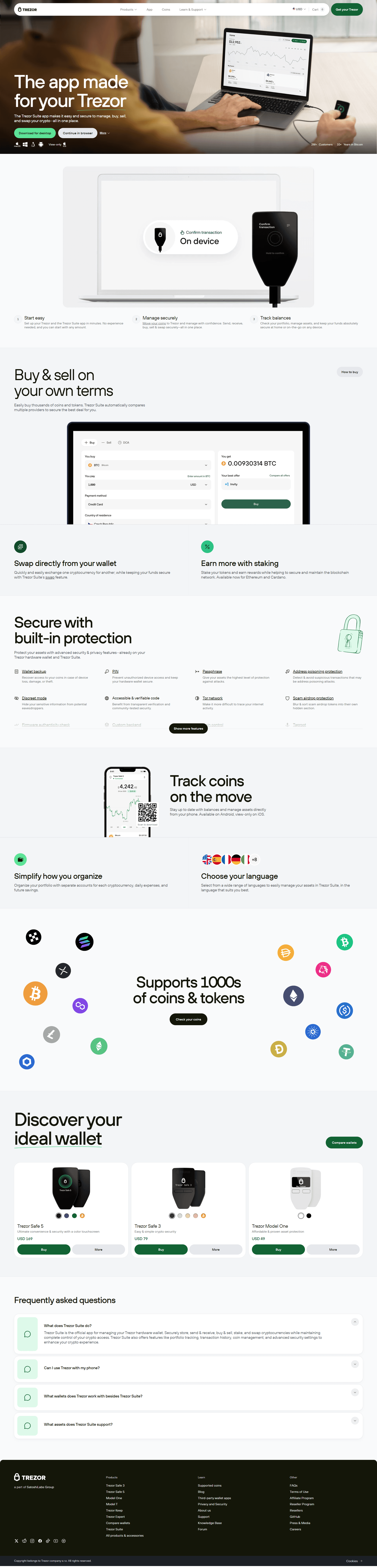
Trezor.io/start – Beginner’s Guide to Setting Up Your Trezor Hardware Wallet
Setting up a hardware wallet for the first time can feel intimidating, but Trezor.io/start makes the process simple and secure. This official Trezor setup page guides users through installing Trezor Suite, initializing the device, and backing up the recovery seed. The steps below explain the process clearly so even first-time crypto users can complete the setup without confusion.
What You Can Do at Trezor.io/start
The Trezor.io/start page is designed as a complete onboarding hub. After selecting your device model, you will be guided to:
Download Trezor Suite desktop app
Update or install device firmware
Create or restore a wallet
Learn wallet security best practices
Because hardware wallets protect crypto offline, it is essential to follow the official setup path and avoid look-alike phishing sites.
Understanding Trezor Hardware Wallets
Trezor wallets keep your cryptocurrency private keys offline, out of reach from online attacks. Instead of relying on exchanges or mobile wallets, your funds are secured in a dedicated physical device that only you control.
Main advantages include:
Full ownership of private keys
Cold-storage protection
Compatibility with major cryptocurrencies
Secure backup and recovery process
Easy management through Trezor Suite
For long-term holders and beginners alike, Trezor provides one of the safest environments to store digital assets.
How to Set Up Your Wallet Using Trezor.io/start
Follow this beginner-friendly setup flow:
Step 1: Visit the Official Setup Page
Open your browser and go directly to Trezor.io/start. Choose your Trezor model (Model One or Model T).
Step 2: Install Trezor Suite
Download Trezor Suite for your operating system. This software allows you to manage coins, check balances, and update your device.
Step 3: Connect Your Device
Plug the Trezor wallet into your computer using the supplied cable. Trezor Suite will automatically recognize it.
Step 4: Update Firmware
If no firmware is installed or an upgrade is available, complete the update before continuing. Always update through Trezor Suite only.
Step 5: Create Your Wallet
Select Create Wallet to generate a new one. You will then be prompted to back up your recovery seed.
Step 6: Secure Your Recovery Seed
Your device will display 12–24 recovery words. Write them carefully on the recovery card and store them offline.
Do not:
Photograph the seed
Save it in cloud storage
Share it with anyone
Type it into websites
Anyone with this phrase can access your funds.
Step 7: Set a PIN Code
Create a strong PIN to protect against unauthorized physical access.
Step 8: Start Using Trezor Suite
You can now receive, send, or track crypto assets directly from the desktop app.
Essential Security Practices for New Users
To maximize wallet security, keep these habits:
Always double-check URLs before entering recovery words
Never reveal your seed phrase to “support teams” or websites
Store backup in more than one secure offline location
Consider adding an optional passphrase for extra protection
Your Trezor device protects your keys — your recovery phrase protects your money.
Conclusion
Trezor.io/start is the safest official route to initialize your Trezor wallet and begin managing cryptocurrency securely. By following the guided steps, backing up your recovery phrase, and using Trezor Suite, you gain full control over your assets while minimizing the risks of online theft. Take your time during setup, store your backup carefully, and enjoy secure self-custody of your digital wealth.